

HOTROD RV
Biological odor and waste support for RV and marine holding tanks.
HOTROD RV is designed for black and gray tanks where odor, waste buildup, residue, and repeated fill-and-dump cycles can make tank maintenance frustrating.
Designed to help:
- Support biological breakdown of organic waste
- Reduce odor by addressing waste biologically rather than simply masking it
- Help limit residue and buildup inside holding tanks
- Support smoother tank discharge at dump stations
Why HOTROD: Instead of depending on harsh deodorizing chemicals, HOTROD supports the microbial activity responsible for natural waste digestion.
Use according to label directions as part of your normal RV or marine holding-tank routine.
Choose options
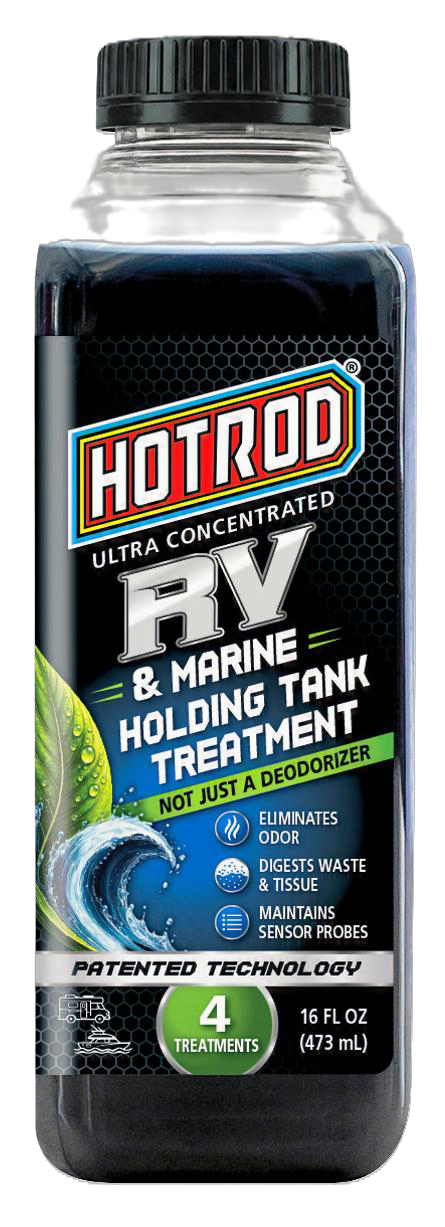
RV & MARINE HOLDING-TANK TREATMENT
Treat the waste. Don’t just cover the odor.
HOTROD RV is designed to support biological activity inside black and gray water holding tanks. RV and marine tanks are small, concentrated wastewater environments that fill, empty, heat up, cool down, and often sit between trips. HOTROD works with the waste biology to support breakdown, odor control, cleaner tank surfaces, and better tank management.
Helps support the biological processes involved in breaking down organic waste, tissue, and other biodegradable material inside the holding tank.
Rather than making fragrance the whole strategy, HOTROD focuses on the wastewater environment and biological waste breakdown to help address odor at its source.
By supporting breakdown of toilet paper and organic residue, HOTROD can help reduce material that coats tank-level sensors and contributes to inaccurate readings.
Supports digestion of organic material that can remain on tank surfaces and contribute to accumulated residue between dump cycles.
HOTROD is formulated with downstream wastewater biology in mind. The treatment is designed to support biological activity rather than relying on a harsh disinfecting approach that can work against the biology used in septic and wastewater systems.
Better waste breakdown can help support a more manageable dump-and-rinse routine at approved disposal locations.
WHAT GOES IN YOUR RV TANK GOES SOMEWHERE NEXT
Better for your tank. Designed with the next system in mind.
Many RVs are ultimately emptied at campground or RV-park dump stations, and many of those facilities discharge into onsite septic or other biological wastewater systems. That means the chemistry used in the holding tank does not simply disappear when you pull the dump valve.
HOTROD is built around a wastewater-biology approach. Its components are selected to work with biological waste degradation and to remain compatible with the kind of microbial activity downstream treatment systems depend on. Some holding-tank products take a very different approach, relying heavily on fragrance or aggressive disinfecting chemistry. HOTROD is designed to manage odor and waste without making the downstream wastewater system pay the price.
A 16-ounce bottle provides four standard applications, making dosing simple to remember from trip to trip.
Holding tanks can see a lot of organic loading in a relatively small volume, making active waste breakdown especially important.
Unlike a residential septic tank, RV and marine tanks are repeatedly filled and emptied, so the biological environment is always changing.
Tanks may sit for periods of time in changing temperatures, creating conditions where odor, tissue, and residue can become more noticeable.
SIMPLE HOLDING-TANK ROUTINE
Four applications in every bottle.
For routine use, one 16-ounce bottle provides four 4-ounce treatments. Add HOTROD RV as part of your normal black- or gray-tank routine and let the treatment work while the tank is in use.
Use one 4-ounce routine treatment in the appropriate holding tank according to label directions.
Allow HOTROD to work within the normal wastewater environment, supporting waste and tissue breakdown while helping manage odor and residue.
Empty the tank only at approved disposal locations and repeat the 4-ounce treatment as needed according to the product label and your normal use cycle.
For severe odor or heavy organic residue, HOTROD RV can also be used as a full-bottle tank soak. Add the entire 16-ounce bottle to the holding tank, add enough water to thoroughly wet and cover the tank environment, and allow it to remain in the tank for approximately 4–7 days before dumping and rinsing at an approved disposal location. This concentrated soak is intended to give the treatment more time to work on odor-causing organic material, tissue, and residue inside the tank.
HOTROD RV FAQ
What RV and marine owners usually want to know.
How many treatments are in one bottle?
A 16-ounce bottle provides four routine 4-ounce applications.
Can I use HOTROD RV in both black and gray tanks?
Yes. HOTROD RV is positioned for biological support in both black and gray water holding tanks. Follow the product label for application directions.
Is HOTROD RV just an odor cover-up?
No. The product is designed around supporting biological waste breakdown inside the holding tank. Odor management is part of the benefit, but the approach is not simply to rely on fragrance to cover the smell.
Can HOTROD help with inaccurate tank-level sensors?
It can help when the problem is organic residue or toilet paper coating the sensors. By supporting breakdown of tissue and organic material, HOTROD can help reduce buildup on sensor surfaces. It will not repair a failed sensor or electrical problem.
What if my RV dumps into a septic system?
That downstream connection is one of the reasons HOTROD RV is formulated the way it is. Many campground and RV-park dump stations ultimately feed septic or biological wastewater systems. HOTROD is designed around supporting wastewater biology rather than using a harsh disinfecting approach that can work against the microbial activity those systems depend on.
What should I do for extreme holding-tank odor?
For a severe odor situation or a tank that needs a deeper organic clean, use the full 16-ounce bottle as a concentrated soak. Add water so the treatment has good contact throughout the tank, allow it to remain for roughly 4–7 days, then dump and rinse at an approved disposal location.
Why are RV holding tanks different from a residential septic system?
RV and marine tanks are much smaller and go through frequent filling, dumping, storage, and temperature changes. They are temporary holding environments rather than full onsite wastewater-treatment systems, so HOTROD RV is positioned specifically around holding-tank waste management.
Will it help with tank residue?
HOTROD RV is designed to support biological breakdown of organic material that can contribute to residue and buildup inside holding tanks. It is not a claim that the product will remove mineral scale or fix a physical obstruction.
Will it unclog a blocked valve or discharge line?
No. HOTROD RV is not a mechanical drain opener. A physically blocked or damaged valve, pipe, toilet, or discharge line should be mechanically cleared or repaired.
Learn more about wastewater care
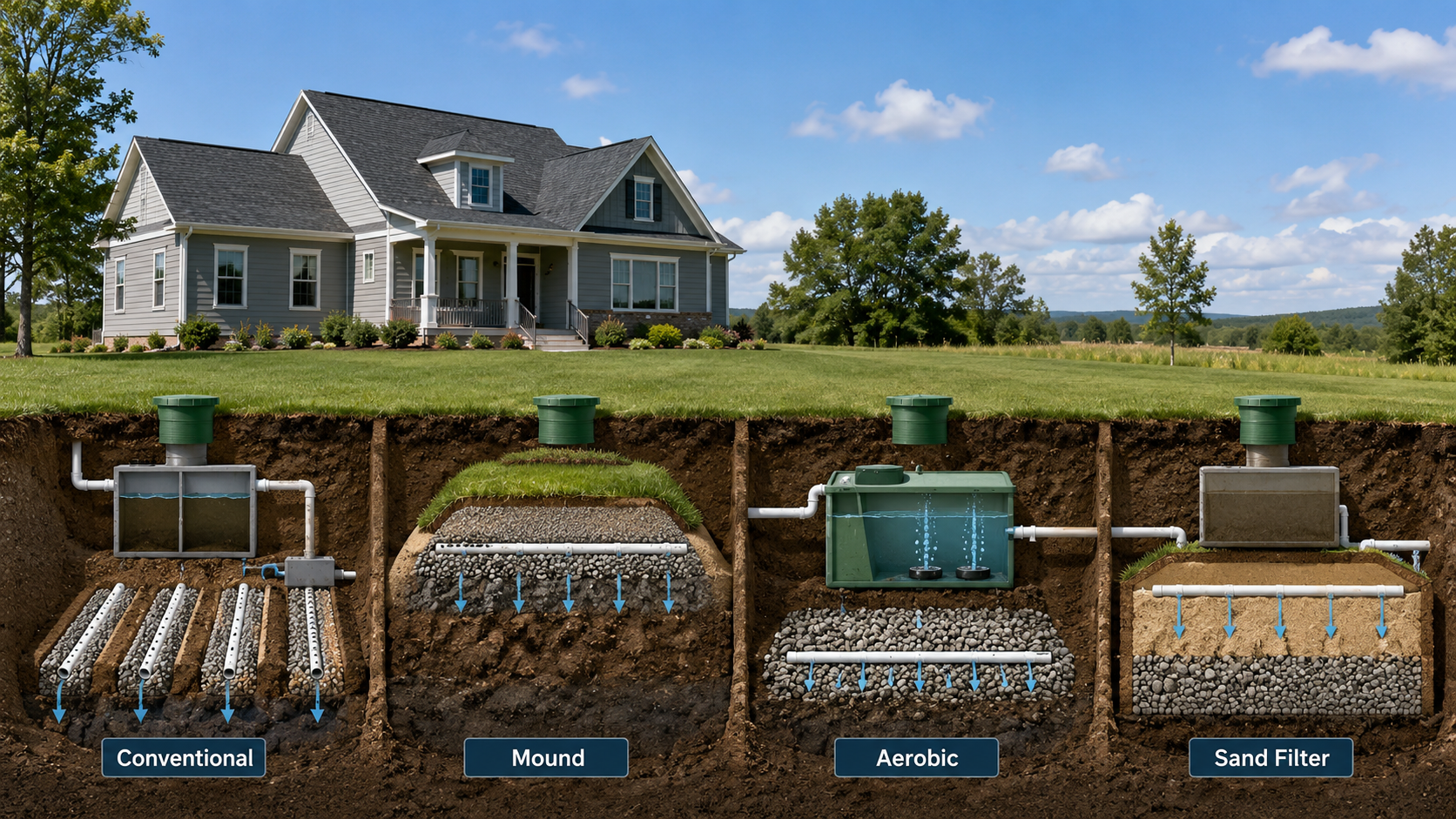
The Pros and Cons of Different Septic System Types
Choosing a septic system is a long-term decision. This guide breaks down common system types, how they work, and what homeowners should consider before building, buying, or upgrading.
Read more
Choosing the Best Toilet Paper for Septic Systems: Tips and Warnings
The wrong paper and flush habits can create real septic problems over time. This post explains how to choose septic-safe toilet paper and which common household items should stay out of the toilet.
Read more
Can a Septic Tank Be Too Big? Finding the Right Size
Choosing the right septic tank size starts with understanding how your home uses water. This guide walks through the key factors that affect tank sizing, why both undersized and oversized tanks can...
Read moreAll Products