Why Your Septic System Is Gurgling (Causes & What to Do)
Why Your Septic System Makes Gurgling Sounds
If you’re hearing gurgling from your drains or toilet, your system is trying to tell you something.
In most cases, this is an early warning sign that water and air are not moving through the system the way they should. It does not always mean failure, but it does mean it is worth paying attention.
A healthy septic system should operate quietly. When that changes, there is usually a reason.
What’s Actually Happening Inside the System
Your plumbing and septic system rely on smooth flow and proper airflow.
When something restricts that flow, air gets pulled back through the pipes instead of venting properly. That is what creates the gurgling sound.
If you’re not familiar with this process, it helps to understand how your septic system works and how water, waste, and air are meant to move together.
Common Causes to Be Aware Of
Gurgling is usually tied to one or more of these conditions:
- Partial blockages in plumbing or pipes
- Buildup inside the septic tank
- A tank nearing capacity
- drain field issues that restrict absorption
- Venting problems affecting airflow
- tree root intrusion into underground lines
In many homes, it is not just one issue. It is a combination of small restrictions adding up over time, especially when the drain field begins to struggle.
What to Watch For Next
The sound itself is one signal. These additional signs help you understand how serious it may be:
- Drains slowing down
- More than one fixture affected
- Water levels shifting in toilets
- Odors inside or outside the home
If you’re also noticing slow drains, it can point to a larger restriction building somewhere in the system rather than a one-time issue.
When these symptoms begin to stack together, the system is under increasing strain.
Where Most Quick Fixes Fall Short
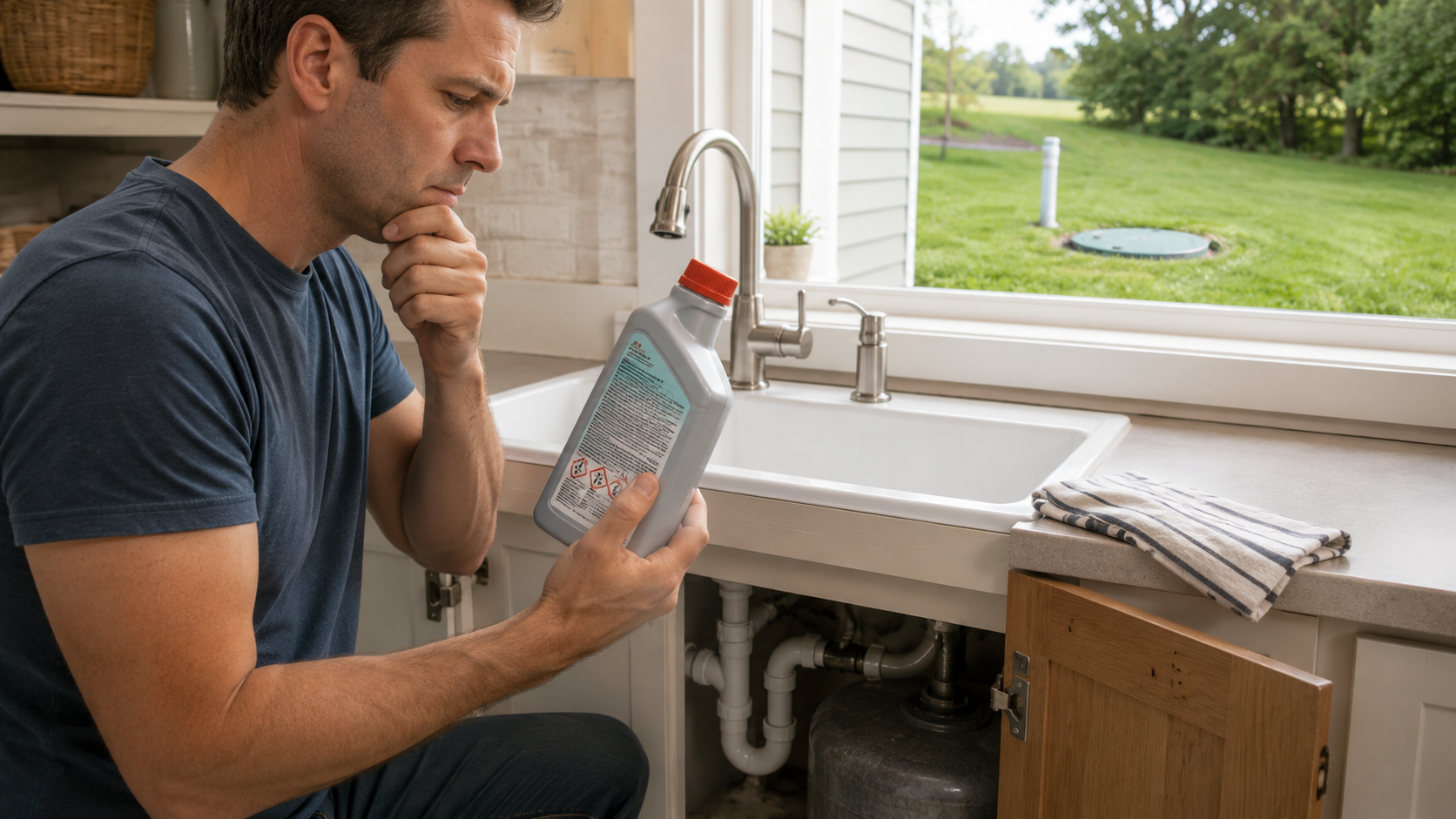
A common first step is to try a chemical drain cleaner or a short-term fix.
The challenge is that most of these approaches only address surface symptoms. In many cases, using chemical drain cleaners can disrupt the biological activity your septic system depends on.
That means the underlying issue often remains and continues to build.
A More Reliable Way to Address the Problem
Gurgling usually points to a combination of restricted flow and reduced biological performance.
When the system is working well, naturally occurring bacteria help break down waste and keep materials moving efficiently. When that balance is off, buildup begins to form and flow slows down.
Addressing both flow and biological conditions early can help:
- Restore more consistent drainage
- Reduce buildup inside the system
- Prevent larger backups or failures
- Extend the life of the drain field
Supporting your system with a restorative septic treatment can help maintain that balance and keep things functioning the way they should over time.
How a Healthy System Should Behave
A properly functioning septic system should be:
- Quiet during everyday use
- Consistent in how it drains
- Free of noticeable odors
- Able to handle normal water use without issue
Small changes are often the first signal that something is shifting.
Protecting Your System Moving Forward
A few habits go a long way:
- Pump the tank on a consistent schedule
- Be mindful of what goes down drains
- Avoid harsh chemicals that disrupt system biology
- Protect the drain field from compaction and root intrusion
- Support the system with treatments designed to maintain biological balance
The goal is not just to fix a problem. It is to keep your system working reliably over time.
Take the Next Step
If your system has started making noise, it is a good time to get ahead of it.
Take a few minutes to understand what your system needs and how to support it long-term.