How Septic Systems Work
This guide explains how septic systems work, what each part does, and why biology and maintenance matter for long term system health
If your home uses a septic system, it is doing important work every day, whether you think about it or not. Most homeowners never get a clear explanation of how their system actually works. They only hear about it when something goes wrong.
Understanding how a septic system works is not about learning technical jargon. It is about knowing enough to take care of a system that is expensive to repair and even more expensive to replace.
A septic system is simple in design, but it depends on balance. When that balance is maintained, systems can work quietly and reliably for decades.
What Is a Septic System Designed to Do?
A septic system treats household wastewater safely using gravity, natural biology, and soil.
Everything that goes down a drain in your home ends up moving through this system. Toilets, sinks, showers, washing machines, all of it flows to the same place.
The system is designed to do three things well:
-
Separate solids from liquids
-
Allow bacteria to break down waste
-
Return treated water safely to the soil
When each step works the way it was designed to, the system stays dependable and out of the way.

What Are the Main Parts of a Septic System?
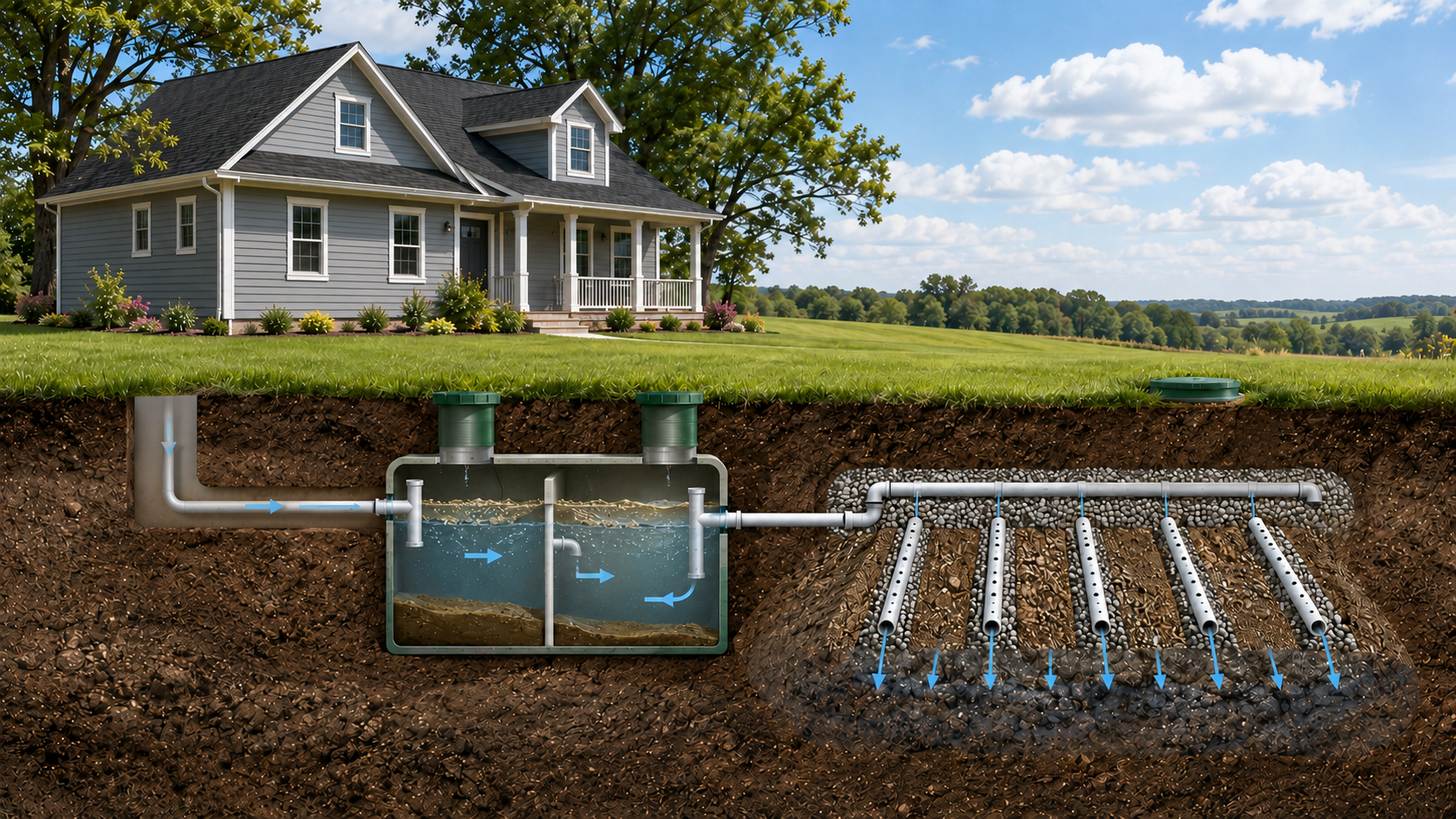
Most residential septic systems are made up of three primary components. The septic tank, the biological process, and the drainfield.
What Does the Septic Tank Do?
The septic tank is the first stop for wastewater leaving your home.
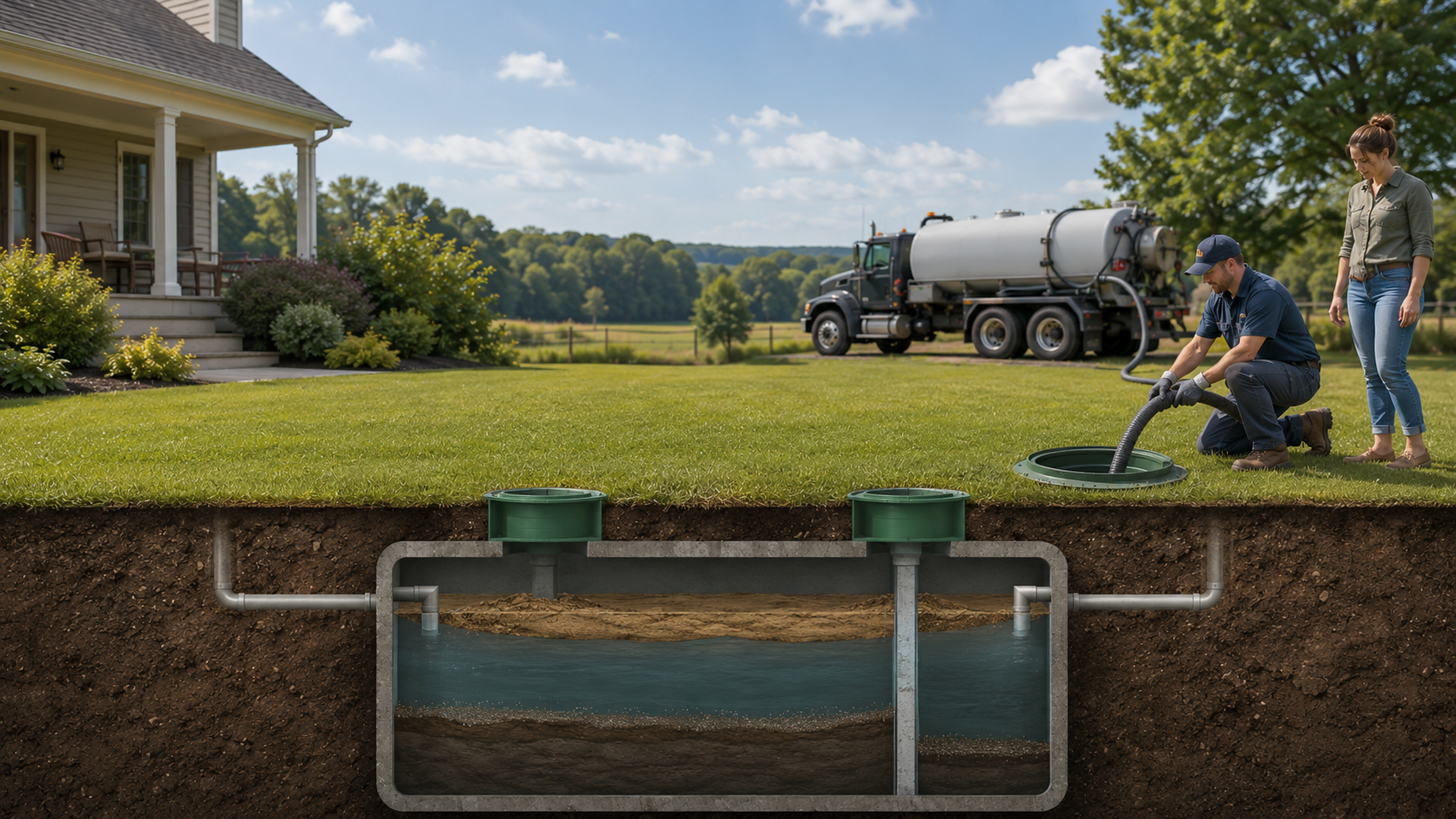
Inside the tank, gravity does most of the work. Heavy solids settle to the bottom and form a sludge layer. Lighter materials float to the top and form a scum layer. Between those two layers is liquid wastewater.
This separation is intentional. It gives bacteria time to begin breaking down waste before the water moves on.
How Does Biology Work Inside a Septic Tank?
Naturally occurring bacteria live inside the tank. Their role is to break down organic material and reduce how quickly solids build up.
This biological activity is what keeps the system stable. When bacteria are healthy, waste breaks down more efficiently and fewer solids move downstream.
When biology is disrupted, solids accumulate faster and stress shifts to other parts of the system.
What Does the Drainfield Do?
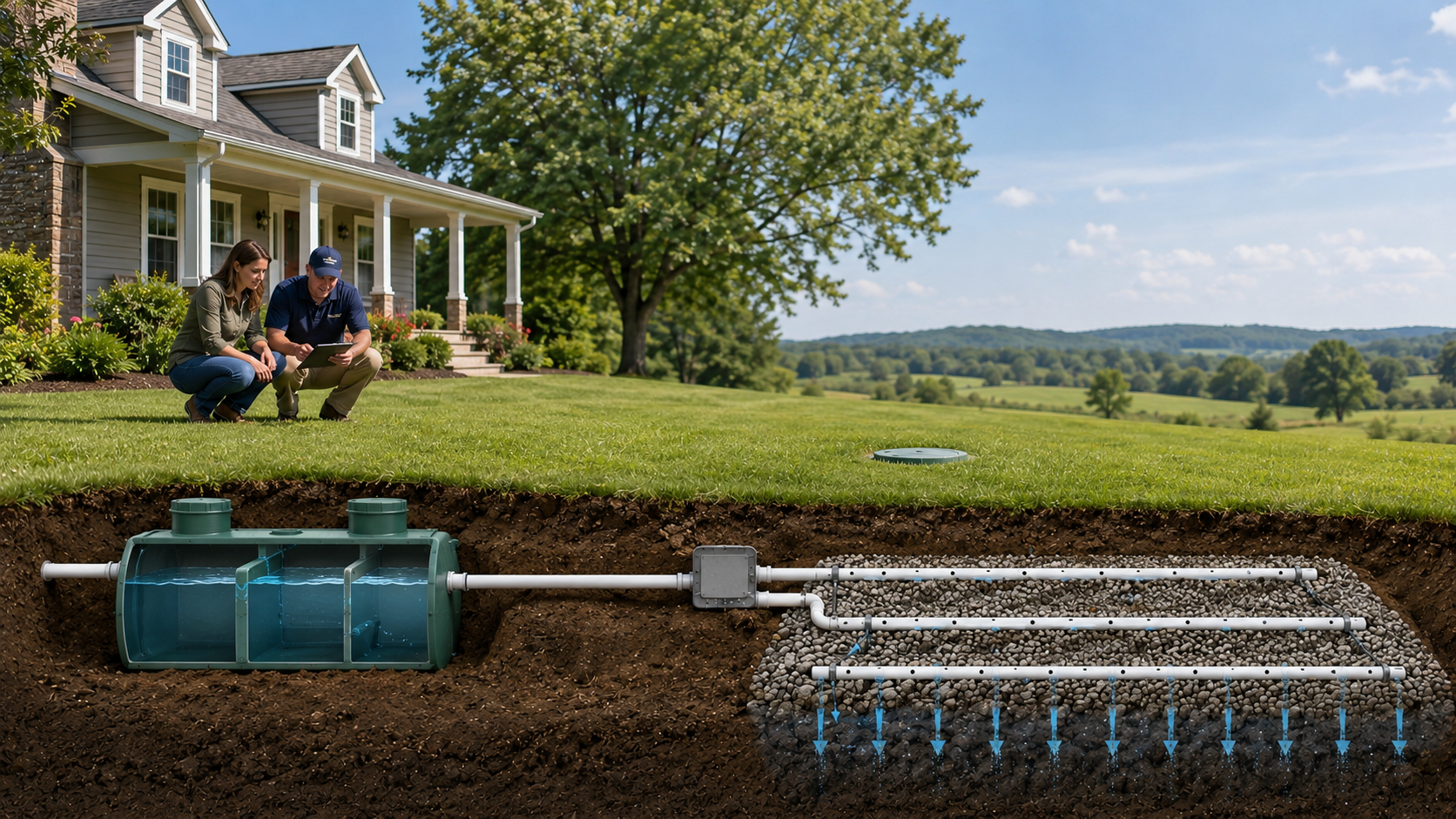
After partial treatment in the tank, liquid wastewater flows into the drainfield.
The drainfield disperses this water into the soil, where microbes and natural filtration complete the treatment process before the water returns to the environment.
The drainfield depends on the tank doing its job. If too many solids leave the tank, soil pores can clog and the system begins to lose capacity.
Why Is Biology So Important to a Septic System?
A septic system is not just plumbing. It is a biological system.
Bacteria are responsible for reducing waste volume and keeping solids from overwhelming the system. When harsh chemicals or antibacterial products enter the system, they do not just disappear. They interfere with the organisms doing the work.
When biology is weakened, the system has to work harder and components wear out sooner.
How Do Septic Systems Usually Develop Problems?
Most septic problems do not come from a single mistake. They develop slowly over time.
Common contributors include:
-
Regular use of harsh cleaners
-
Waiting too long between pumping
-
Overloading the system with water or waste
-
Treating symptoms instead of supporting the system
Often, everything looks fine above ground while stress is building below.
By the time slow drains, odors, or backups appear, the system has usually been struggling for a while.
Why Does Understanding Your Septic System Matter?
Uncertainty is what causes most stress for septic owners.
When you understand how your system works, you are no longer guessing. You know why maintenance matters. You understand which choices protect the system and which ones shorten its life.
That knowledge gives you control. It leads to better decisions, fewer surprises, and more confidence in how you care for your property.
This is why companies like Hotrod focus on education first. When homeowners understand what is happening underground, they are better equipped to protect their systems for the long term.
What Should You Understand Next About Your Septic System?
Once you understand how a septic system works, the next question is how long it should last and what actually affects its lifespan. Find that article and more at The Learning Center.