How Often to Pump a Septic Tank
This article explains how often a septic tank should be pumped based on household size and why pumping is essential for protecting the drainfield and system lifespan.
One of the most common septic questions homeowners ask is how often a septic tank should be pumped.
The honest answer is that there is no single schedule that fits every household. Pumping frequency depends on how much water and waste move through the system and how well solids are managed over time.
Understanding the reasoning behind pumping schedules makes it easier to stay ahead of problems instead of reacting to them.
Why Septic Tanks Need to Be Pumped
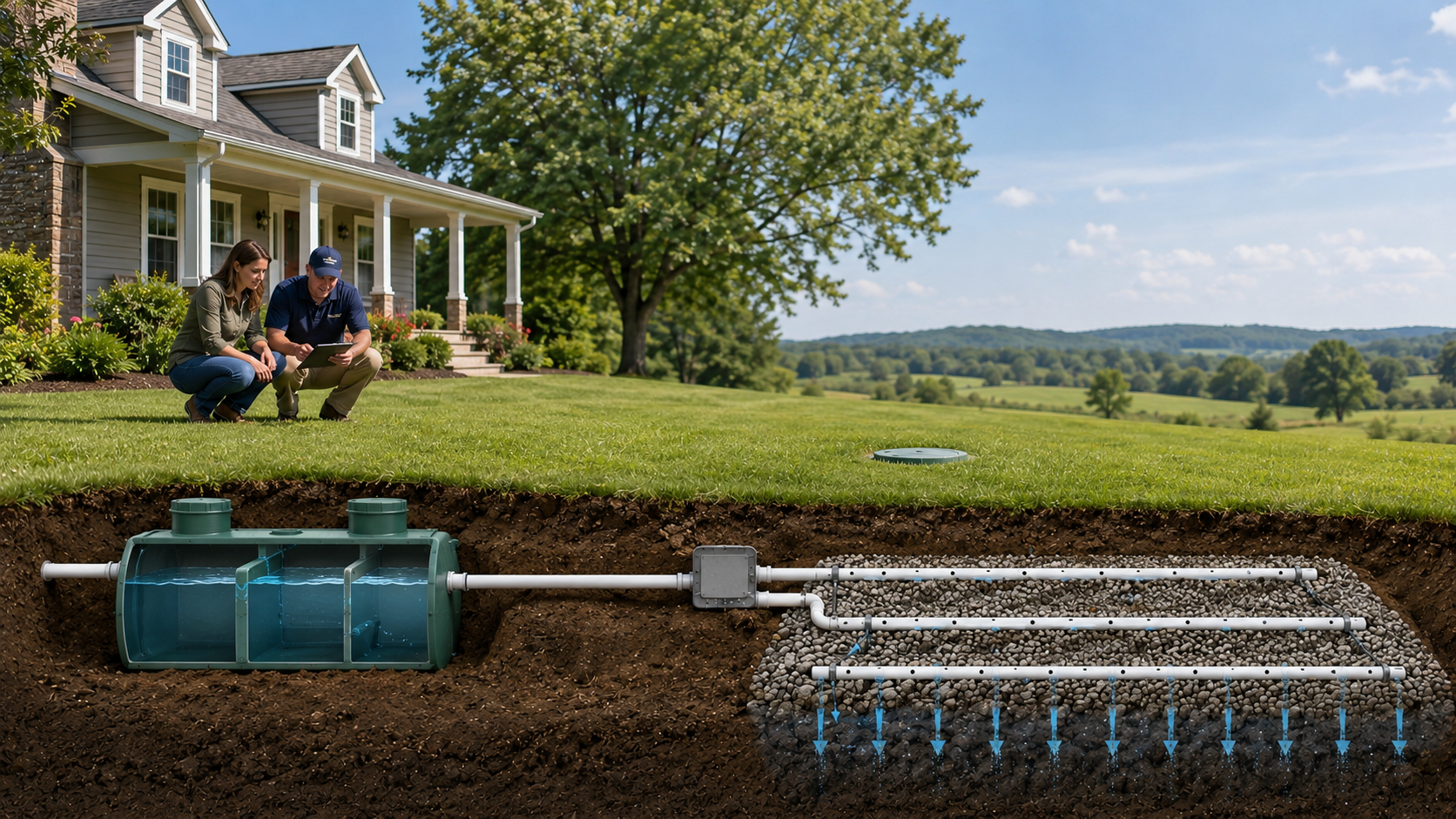
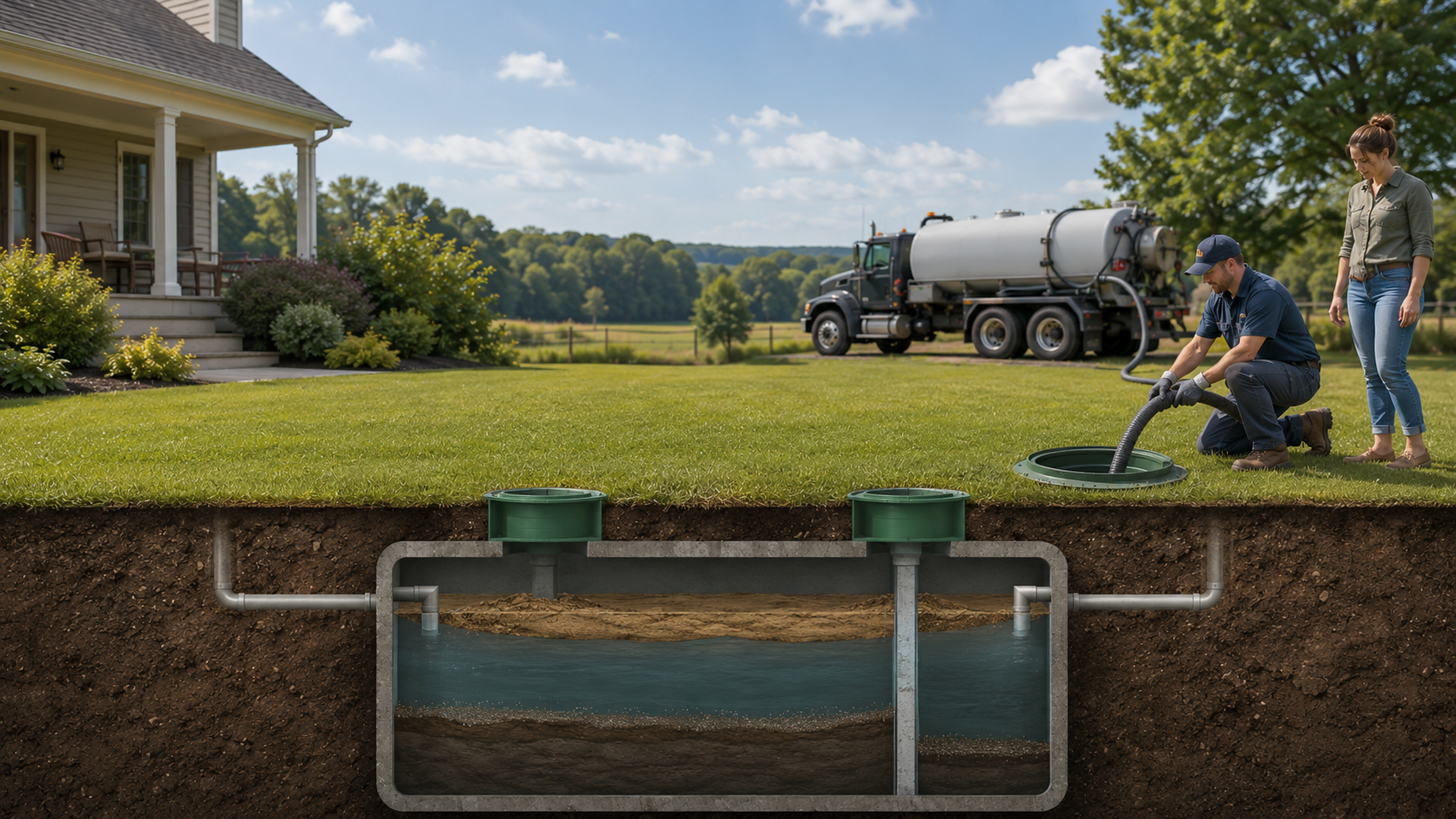
A septic tank is designed to separate solids from liquids and give bacteria time to break down waste. Over time, solids that cannot fully break down accumulate at the bottom of the tank.
Pumping removes these accumulated solids before they can:
-
Reduce tank capacity
-
Flow out toward the drainfield
-
Shorten the life of the system
Pumping is preventative maintenance. It protects the drainfield and keeps the system operating as designed.
How Household Size Affects Pumping Frequency
The number of people in a household plays a major role in how quickly solids build up in the tank.
Family of 2
For a household of two people, pumping is often recommended every 4 to 5 years.
Lower daily water use means solids accumulate more slowly. Even so, pumping should not be skipped. Solids still build up over time, just at a slower rate.
Family of 4
For a household of four, pumping every 3 to 4 years is common.
This is one of the most common household sizes and also one of the easiest places for maintenance to slip. Everything may seem fine on the surface while solids continue to accumulate quietly.
Family of 6
Larger households place more consistent demand on a septic system. Pumping every 2 to 3 years is often appropriate.
More water use and more waste leave less margin for error. Staying on schedule becomes even more important.
Why Pumping Alone Is Not the Full Picture
Pumping removes solids, but it does not address how quickly those solids accumulate between service visits.
Two households with the same number of people can have very different pumping needs based on:
-
Water usage habits
-
Types of products used in the home
-
Biological activity inside the tank
When biological breakdown is working well, solids build up more slowly. When biology is disrupted, solids accumulate faster and pumping needs increase.
This is why pumping should be viewed as one part of a broader maintenance approach, not the only solution.
Signs You May Be Pumping Too Late
Waiting too long between pumping increases risk, even if obvious symptoms are not present.
Potential warning signs include:
-
Slower drains throughout the house
-
Stronger odors near the tank or drainfield
-
Higher than normal sludge levels during inspection
By the time these signs appear, the system may already be under stress.
A Smarter Way to Think About Pumping
The goal of pumping is not to react to problems. It is to prevent them.
A smart pumping plan:
-
Matches household size and usage
-
Is adjusted based on system performance
-
Is paired with practices that support biological balance
This approach protects the drainfield, extends system lifespan, and reduces the chance of unexpected repairs.
That long-term thinking is central to how Hotrod approaches septic care. The focus is not on forcing quick results, but on supporting the system so it functions reliably year after year.
Where This Leads Next
Once pumping schedules are clear, the next step is understanding overall septic system maintenance and what actually makes a difference over time.
Next, we will walk through septic system maintenance in practical terms and explain how small, consistent actions protect the entire system.